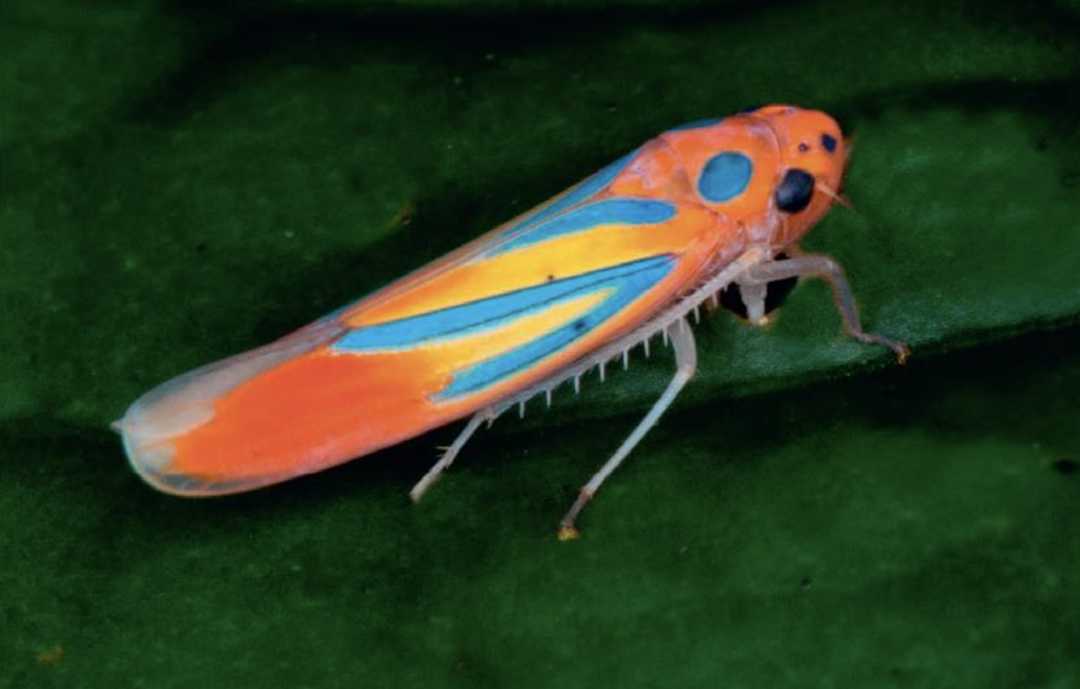
The leafhopper’s dorsal surface features alternating bands of electric blue and sunshine yellow, while its abdomen is tipped with a burst of fiery orange. The contrast between these colors is so intense that it almost appears artificial—yet every pigment is a product of structural coloration or natural pigments, evolved to serve both aesthetic and functional purposes. Scientists speculate that the vibrant pattern may deter predators through aposematism, warning of toxicity or unpalatability, while also aiding in mate recognition.
Endemic to Madagascar’s unique biosphere, this leafhopper thrives among tropical plants, using its powerful hind legs to leap between leaves with astonishing agility. As it feeds on plant sap, its colorful form flutters like a tiny jewel, reminding observers that even the smallest creatures in nature’s kingdom can be masterpieces of design. In a world where camouflage often prevails, this leafhopper’s bold display proves that sometimes, standing out is the most remarkable survival strategy of all.